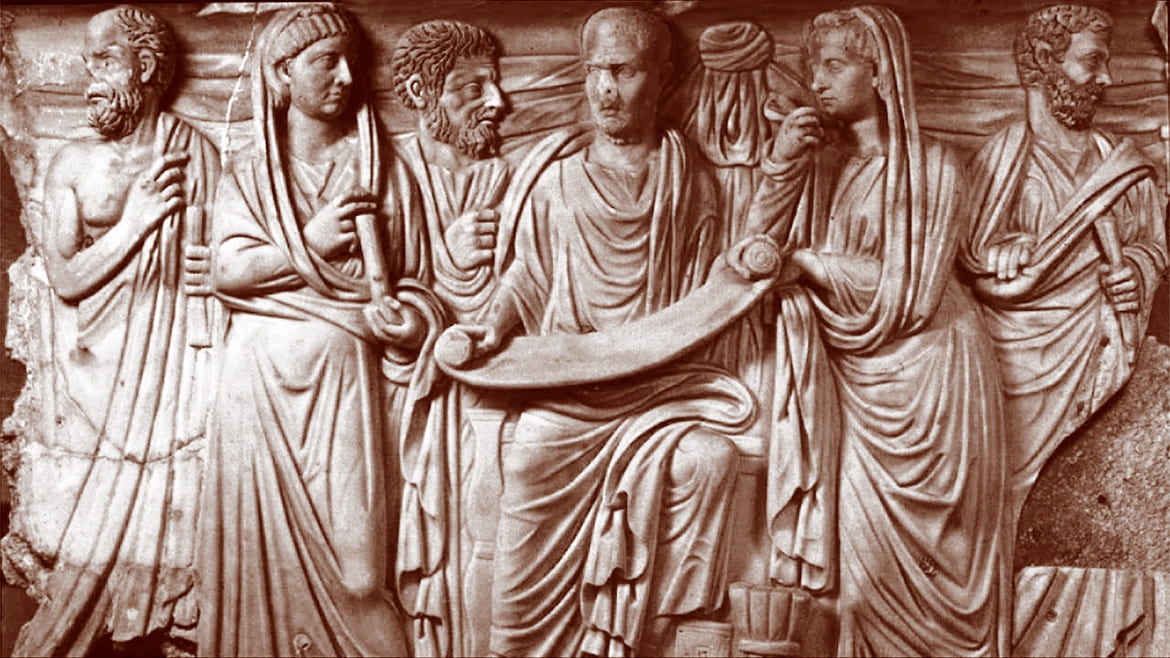
We come to Gnosis ‘through analogies and abstractions’ teaches Plotinus
from Plotinus, Enneads, 6.7.36
ch.5 in book “Jesus and the Lost Goddess” – Timothy Freke and Peter Gandy
The Enneads is the collection of writings by the 3rd-century philosopher Plotinus, compiled by his student Porphyry, forming the foundational text of Neoplatonism. Organized into six books (Enneads) of 54 treatises, it explores metaphysics, ethics, and cosmology, focusing on the soul’s journey from the material world toward the supreme reality of “the One”. The work synthesizes Platonic philosophy with mystical and religious ideas, profoundly influencing later Christian, Islamic, and Western thought.
Key aspects of The Enneads
- Structure: The 54 treatises are grouped into six books, each with a specific focus, as arranged by Porphyry.
- Content:
- Book I: Ethics, happiness, virtue, and beauty.
- Books II & III: Cosmology, physical reality, time, and the soul.
- Book IV: The soul.
- Book V: The intellect and the intelligible world.
- Book VI: Being and “the One,” the ultimate reality.
- Core Philosophy: It presents a hierarchical universe with “the One” at the top, from which all else emanates, and argues the soul can ascend to unite with it through purification and virtue.
- Influence: It is a cornerstone of Neoplatonism and significantly impacted major religious and philosophical traditions, including Christianity (through figures like Augustine) and Islam.